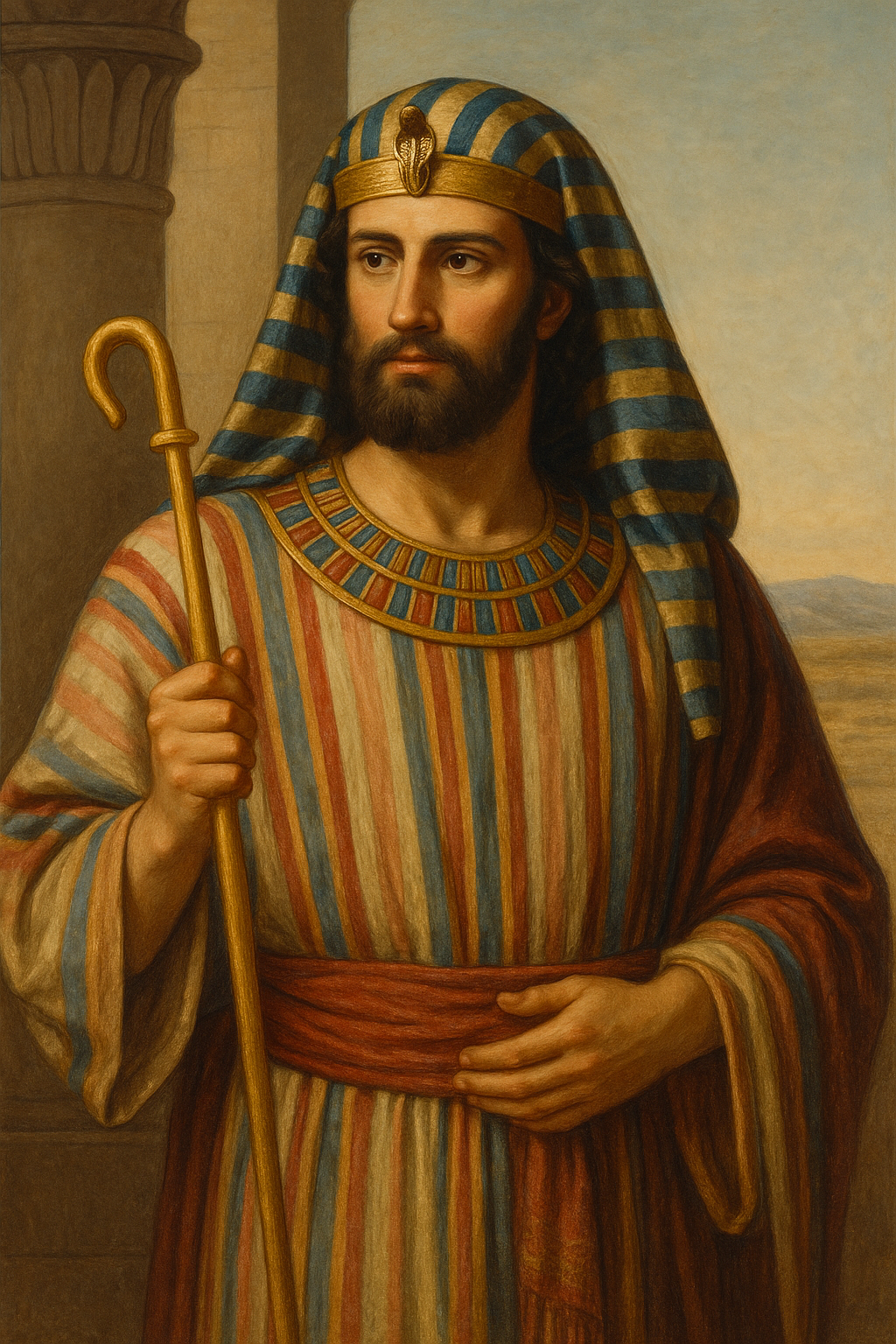
The Torah does not describe Joseph, son of Jacob, as a meditator in the way we usually mean today—sitting in silence, watching the breath, or following a contemplative method.
But if we take “meditation” in the broader sense—deep reflection, awareness of God’s presence, and inner clarity in the midst of suffering—then many aspects of Joseph’s life resonate strongly with meditative qualities.
Context in the Torah
The Torah presents Joseph as a dreamer and interpreter of dreams (Genesis 37:40-41). In ancient Near Eastern culture, drams were seen as sacred communications. Joseph’s ability to interpret dreams, discern their meaning, and apply them required a contemplative, inner-looking mind.
When faced with hardship—betrayed by his brothers, enslaved, imprisoned—Joseph showed remarkable inner resilience and presence of mind. He didn’t collapse into despair; instead, he maintained clarity and faith. His ability to forgive his brothers (Genesis 45) points to a heart deeply attuned to letting go of anger, much like what meditation cultivates.
Jewish Meditative Framing that Might Have Applied to Joseph
In Jewish tradition:
The word hitbodedut (self-seclusion/meditation), emphasized later by Rabbi Nachman of Breslov, describes being alone in silence with God. Joseph in prison, abandoned, yet finding inner strength, can be seen as an early archetype of this practice. The word meditation nor the concept exactly as we understand it today is mentioned in the Torah, but the idea and the concept is certainly implied.
The Psalms (though written later) often portray turning inward in silence: “Be still and know that I am God” (Psalm 46:10). Joseph’s story embodies this stillness in action.
A Meditator by Archetype
If we speak archetypically, Joseph’s qualities mirror meditation:
Presence: He remained clear and steady in every circumstance.
Insight: He saw beneath appearances, interpreting dreams and situations.
Compassion: He released resentment and chose forgiveness.
Alignment: He acted from trust in God’s deeper plan.
So while Joseph may not have practiced formal “meditation” as in Buddhist or modern mindfulness terms, he can be viewed as a biblical model of meditative awareness—one who listens deeply, stays centered, and acts with clarity and compassion.
Joseph shows us that meditation is not only about silence on the cushion. It is about the clarity to see deeply, the presence to endure trials, and the compassion to forgive. In this way, Joseph is a model meditator for us all.